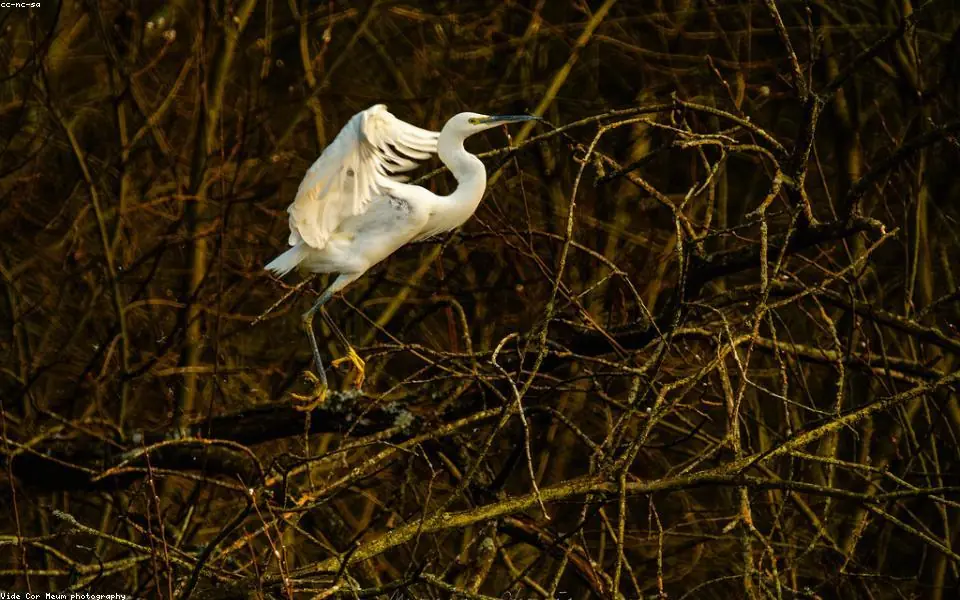
Bird photography in Canada rewards patience more than expensive gear. Whether you're shooting in Quebec's boreal forests, Ontario wetlands, or BC coastal mudflats, the same technical principles apply — and breaking them costs you the shot. This guide covers equipment decisions, field technique, location strategy, and ethical practice in enough detail to be useful on your next outing.
Why Canada Is One of the Best Places to Photograph Birds
Canada hosts over 680 regularly occurring bird species, with density peaking during spring and fall migration corridors along the St. Lawrence Valley, Great Lakes shoreline, and Pacific Flyway. Quebec alone records roughly 450 species annually, including breeding Boreal Owls, Yellow-bellied Flycatchers, and migrating shorebirds at Cap Tourmente National Wildlife Area, where Snow Geese congregate in numbers exceeding 800,000 birds during peak October movement.
The country's low human density in boreal and subarctic zones means many species remain genuinely approachable compared to European counterparts. A Black-backed Woodpecker in Abitibi will often tolerate a photographer at 6 metres; the same species in a heavily visited forest would flush at 30.
Gear That Actually Matters in the Field
Budget debates dominate online forums, but field conditions in Canada narrow the decisions quickly.
Camera body priorities:
- Minimum 10 fps burst rate (birds in flight demand it)
- Reliable autofocus tracking in low contrast — critical for overcast boreal light
- Weather sealing rated to at least -10C operating temperature
- Dual card slots for backup in remote locations
Lens selection by situation:
| Situation | Focal Length | Notes |
|---|---|---|
| Forest songbirds | 300–400mm f/4–5.6 | Lighter, hand-holdable |
| Shorebirds / waders | 500–600mm f/5.6 | Tripod or gimbal head |
| Raptors in flight | 500–600mm f/4 | Fast AF priority |
| Nest / feeder subjects | 200–300mm f/2.8–4 | Shallow DOF control |
| Habitat context shots | 70–200mm f/2.8 | Environmental portraits |
A 500mm f/5.6 prime weighing under 1.4 kg (available from both Canon and Nikon since 2019) has shifted field work significantly — it fits in a hiking pack and covers 80% of field situations. The f/4 version adds 600g and meaningful low-light advantage, worth the weight for owling or dawn shooting.
Accessories that pay for themselves:
- Wimberley-style gimbal head: essential for anything 500mm or longer in a stationary hide
- Bean bag: more useful than a tripod for vehicle-based photography (legal and common in national wildlife areas)
- Extra batteries: Canon R5 and Nikon Z9 both drop 30–40% capacity below -15C
Understanding Light in Canadian Conditions
The golden hour rule is real but incomplete. Boreal forest photography often produces better results in overcast diffused light because direct sun creates harsh shadows through canopy. Warblers in a spruce thicket are easier to expose correctly at 9 AM under cloud than at 7 AM in direct sun.
Practical light windows by habitat:
| Habitat | Best light condition | Reasoning |
|---|---|---|
| Open water / marshes | 30 min after sunrise | Angle of light, calm water reflection |
| Dense forest | Overcast, soft light | Eliminates dappled shadow problems |
| Coastal mudflats | Low tide + golden hour | Mudflat texture and bird feeding activity |
| Feeders / garden | North-facing setup | Avoids backlit subjects through the day |
Feeder photography deserves specific mention. If you orient your feeder setup so the feeding perches face south or southeast and you shoot from north, subjects remain front-lit across most daylight hours. This is a controllable variable — one of few in bird photography.
Locations in Quebec and Eastern Canada
Quebec's birding infrastructure is better documented than most provinces, with eBird hotspots providing reliable recent sightings.
High-yield locations for photography:
Cap Tourmente NWA — 45 minutes east of Quebec City. Snow Geese concentration in October is visually overwhelming. Access is managed, which keeps shooting distances predictable. American Black Ducks and Northern Pintails use the same tidal marshes.
Parc national des Oiseaux de Bic — St. Lawrence estuary. Common Eiders, Purple Sandpipers, and Harlequin Ducks in season. Rocky shoreline allows low-angle shooting from stable positions.
Tadoussac area — Warblers during fall migration concentrate here in remarkable densities due to geography. Cape May, Tennessee, and Bay-breasted Warblers funnel through the coastal forest in September. Shooting opportunities are excellent but brief — 2–3 week peak window.
Lac Saint-Pierre Biosphere Reserve — Largest freshwater floodplain in the St. Lawrence system. Black Terns, Least Bitterns, and nesting Marsh Wrens. Best accessed by canoe.
Mont-Tremblant National Park — Breeding boreal species including Spruce Grouse, Gray Jay, and Black-throated Blue Warbler. Trail density is high enough to locate birds systematically.
Field Technique: Getting the Shot
Equipment is a minor factor compared to behaviour and positioning.
Approach mechanics:
Move slowly and use existing cover — not constructed blinds unless you're committed to extended stays. Birds read movement more than shape. A person walking at normal pace directly toward a shorebird flock will flush it at 80 metres. The same person moving parallel to the flock at 60 metres, stopping frequently, can close to 25 metres.
Exposure settings for birds:
| Subject | Shutter | Aperture | ISO |
|---|---|---|---|
| Perched songbird (good light) | 1/500s | f/5.6 | 400–800 |
| Perched songbird (overcast) | 1/400s | f/4 | 1600–3200 |
| Bird in flight | 1/2000s | f/5.6–8 | Auto |
| Owl at dusk | 1/250s | f/4 | 6400–12800 |
Modern sensors handle ISO 6400 with acceptable noise in RAW files. Under-exposing to maintain shutter speed produces worse results than raising ISO — shadow noise in post-processing is more destructive than high-ISO grain.
Focus strategy:
Eye-detection autofocus on mirrorless bodies (Sony, Canon, Nikon, OM System) has reduced the skill requirement for focus acquisition, but tracking retention still requires correct subject placement in frame. Keep the subject in the upper third of available AF coverage, not dead centre — the system tracks better when it has room to anticipate direction change.
Ethics and Minimising Disturbance
Canadian wildlife photography ethics are codified in the Canadian Wildlife Act but more relevantly shaped by community norms established through Birds Canada guidelines and eBird's reporting standards.
Specific practices that cause documented harm:
- Playback calls during breeding season: shown to reduce territory establishment and feeding frequency in several warbler species
- Approach to active nests: federal protection under Migratory Birds Convention Act applies to all migratory species; disturbing nests risks legal liability and genuine ecological harm
- Baiting with live prey: practiced occasionally for owl photography, widely condemned and potentially illegal under provincial wildlife regulations
- Publishing precise nest locations publicly: eBird Canada's own guidelines recommend against this, and sensitive species coordinates are filtered from public view in the platform's database
Practices that reduce impact without reducing opportunity:
- Pre-scouting locations to identify regular perch sites, then waiting rather than pursuing
- Staying on established trails in sensitive habitats like tidal marshes and breeding colonies
- Limiting time at any single subject to 15–20 minutes maximum during nesting season
Post-Processing Workflow for Bird Photos
RAW conversion software decisions matter more than most photographers acknowledge. Adobe Lightroom's AI denoise tool (available since 2023) recovers usable detail from ISO 12800 files that would previously have been unusable. DxO PureRAW 4 processes noise reduction before import and performs marginally better on high-ISO bird files in independent testing.
Minimal effective workflow:
- Cull to sharp-eye, correct exposure first — reject everything else
- Apply lens correction and chromatic aberration removal
- Run AI denoise on anything above ISO 3200
- Crop to composition — birds in habitat read better than tight face crops for editorial and portfolio use
- Local adjustment to bring up shadow detail in dark plumage (Black-capped Chickadee body, dark loon plumage)
- Export at 300 dpi for print, 96 dpi / sRGB for web
Green Birding and Photography Without Carbon Cost
Green birding — reaching locations without motorised transport — is an active practice in Canadian birding communities, particularly in Quebec and Ontario urban fringe areas where cycling and public transit can reach productive habitat.
The number 5 MTQ bus route in Montreal reaches Parc-nature de l'Île-de-la-Visitation, a reliable warbler and duck location in both spring and fall. Accessible by metro connection. This kind of logistics detail is rarely documented but practically useful.
Rail connections to Mont-Tremblant and Rivière-du-Loup are limited but exist seasonally. The calculation changes when you consider that a 4-hour train journey with gear produces less disturbance logistics than driving and parking at a sensitive site entrance.
Frequently asked questions
What is the best camera setting for photographing birds in flight in Canada?
Set your camera to continuous high-speed burst (10 fps minimum), use AI servo or continuous autofocus tracking mode, and set shutter speed to a minimum of 1/2000s in good light. Aperture priority with auto-ISO works reliably in variable Canadian light — set minimum shutter speed override in your camera's ISO auto menu to 1/2000s. This keeps exposure consistent as light changes between boreal canopy and open sky.
Which Quebec locations are accessible for wildlife photography without a car?
Cap Tourmente NWA is reachable by seasonal shuttle from Quebec City. Parc-nature de l'Île-de-la-Visitation and Parc-nature du Cap-Saint-Jacques in Montreal are both metro-accessible within 30–40 minutes. Niagara Falls area (Ontario) has consistent owl activity in winter and is accessible by GO Transit from Toronto. Urban ravine systems in Montreal and Quebec City hold surprising diversity during migration.
Is playback ethical for bird photography in Canada?
Conservation consensus as of 2026 is that playback during breeding season (roughly May through July for most species) causes measurable harm to territorial behaviour and nesting success, particularly in species with small territories. Outside breeding season, impact is lower but still debated. Most experienced Canadian bird photographers avoid it entirely — birds located through patience and habitat knowledge produce better images because they're behaving naturally.
What gear is worth renting versus buying for a single bird photography trip to Quebec?
A 500mm or 600mm telephoto lens is worth renting if you photograph birds fewer than 5–6 times per year. Rental cost in Canada runs approximately $80–150 CAD per day depending on lens, available through camera stores in Montreal, Toronto, and Vancouver. A gimbal tripod head is worth owning outright — it weighs under 800g, costs $200–400, and improves keeper rate significantly regardless of which telephoto you use.