Birdwatching in Canada gives you access to over 700 species across wildly different habitats — boreal forest, Atlantic coastline, Prairie wetlands, and Pacific rainforest. You don't need expensive gear or years of experience to get started. This guide covers everything a beginner needs: equipment, identification basics, where to go, and how to build a sustainable practice.
What You Actually Need to Start
Most beginners overbuy. The honest minimum is a pair of binoculars and a field guide. Everything else comes later, once you know whether birding is something you'll stick with.
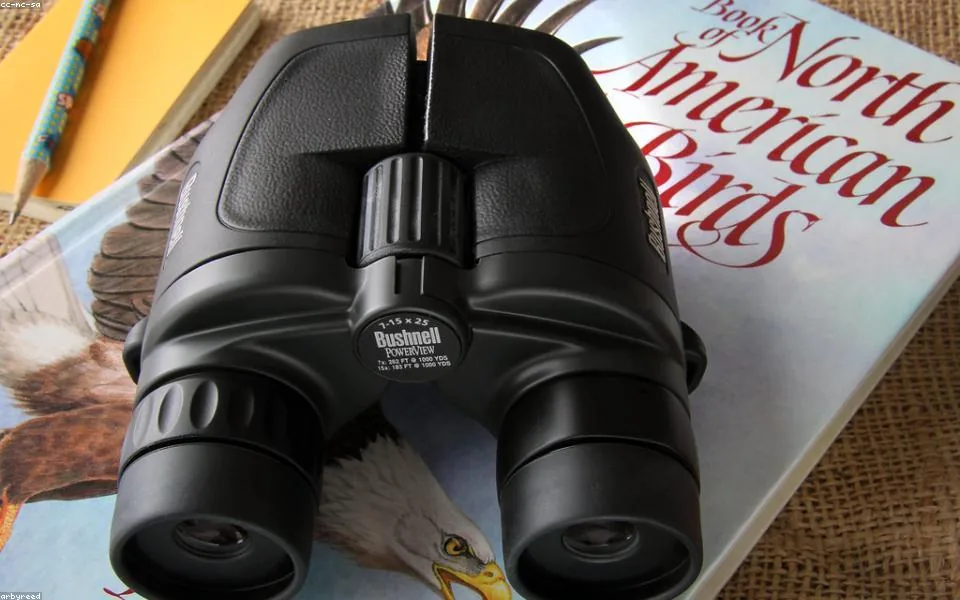
Binoculars: The single most important piece of equipment.
| Spec | Recommended for Beginners | Why It Matters |
|---|---|---|
| Magnification | 8x | Stable image, wide field of view |
| Objective lens | 42mm | Bright image in low light (dawn, dusk) |
| Close focus | Under 2m | Useful for warblers and small songbirds |
| Weight | Under 700g | Neck fatigue over a 3-hour walk adds up |
Budget range: CAD $150–$350 covers reliable optics from brands like Nikon Prostaff, Celestron, or Vortex Crossfire. You don't need to spend $1,200 on your first pair.
Field guides worth owning:
- "Birds of Canada" by Ber Van Perlo — compact, good range maps
- "Sibley Guide to Birds" — more detail, better for serious ID work
- Merlin Bird ID app (Cornell Lab) — free, works offline, covers all Canadian provinces with photo and sound ID
What you don't need yet:
- A spotting scope (useful for shorebirds and raptors, irrelevant for backyard and forest birding)
- A DSLR camera
- Specialized clothing
How to Actually Identify a Bird
New birders fixate on colour, which is the least reliable feature in variable light. Experienced birders work through a mental checklist.
Start with size and shape:
- Is it sparrow-sized, robin-sized, or crow-sized?
- Short tail or long tail? Rounded or notched?
- Bill shape: thick and conical (seed-eater), thin and curved (insect-eater), hooked (raptor)
Then behaviour:
- Does it creep down a tree headfirst? That's a nuthatch.
- Does it pump its tail repeatedly? Check the wagtails and pipits.
- Does it hover before diving? Kingfisher or Belted Kingfisher specifically.
Then habitat:
- Dense shrub edge = sparrows, towhees, catbirds
- Open water surface = ducks, grebes, mergansers
- Mudflat = sandpipers, yellowlegs, dowitchers
Finally, markings. By this point you've narrowed to a handful of candidates, and the eye ring, wing bars, or breast streaking confirm it.
A useful habit: before reaching for the app, spend 30 seconds writing down what you observed. This trains identification skills faster than immediately checking a screen.
Common Birds to Know First in Canada
Learning 20 species well is more useful than skimming 200 species once. These are the birds you'll encounter repeatedly across most Canadian provinces:
| Bird | Habitat | Key Feature | Season |
|---|---|---|---|
| American Robin | Lawns, parks, forests | Orange-red breast | Year-round in southern provinces |
| Black-capped Chickadee | Forests, feeders | Black cap, white cheeks, "chick-a-dee" call | Year-round |
| White-breasted Nuthatch | Deciduous forest, feeders | Walks headfirst down tree trunks | Year-round |
| Dark-eyed Junco | Forest edges, feeders | White outer tail feathers flash in flight | Year-round, more visible in winter |
| Downy Woodpecker | Forests, backyards | Smallest woodpecker, white back stripe | Year-round |
| American Goldfinch | Fields, gardens | Bright yellow (male, summer), olive-yellow (winter) | Year-round |
| Cedar Waxwing | Fruiting trees, forest edges | Silky plumage, yellow tail tip, red wing spots | Year-round |
| Red-winged Blackbird | Marshes, roadsides | Red-and-yellow shoulder patch (male) | Spring–fall |
| Common Loon | Lakes | Checkered back, yodeling call | Spring–fall; iconic on northern lakes |
| Canada Goose | Parks, fields, water | Black head and neck, white chinstrap | Year-round |
Once you're comfortable with these, seasonal migrants become much easier to pick out because they don't match anything already familiar.
Where to Go Birdwatching in Canada
Quebec: The St. Lawrence River corridor is one of the most productive birding areas in eastern Canada. Cap Tourmente National Wildlife Area, east of Quebec City, hosts 300,000+ Snow Geese during spring and fall migration. Parc national de la Jacques-Cartier offers boreal species including Spruce Grouse, Gray Jay, and Boreal Chickadee within an hour of Quebec City.
Ontario: Point Pelee National Park is the southernmost point of mainland Canada and funnels migrating songbirds into a dense, observable concentration during May. Long Point on Lake Erie is critical for waterfowl. Toronto's Tommy Thompson Park records 300+ species per year within city limits.
British Columbia: Reifel Migratory Bird Sanctuary outside Vancouver is walkable, family-accessible, and active year-round. The Boundary Bay area is one of the best shorebird sites on the Pacific Flyway.
Manitoba: Oak Hammock Marsh, north of Winnipeg, is a restored wetland with 300+ bird species recorded. Spring staging of shorebirds and waterfowl peaks in late April and May.
Nova Scotia: Bon Portage Island is a critical stopover for warblers and other passerines during fall migration. Cape Sable Island is accessible by car and consistently produces rare shorebird records.
Setting Up a Garden for Birds
If you have outdoor space, you can bring birds to you. What you plant and how you manage the space matters more than what feeders you put out.
Feeders by species target:
| Feeder Type | Seed/Food | Species Attracted |
|---|---|---|
| Tube feeder with small ports | Nyjer (thistle) seed | American Goldfinch, Pine Siskin, redpolls |
| Platform feeder | Mixed seed, sunflower | Juncos, sparrows, Blue Jay |
| Suet cage | Beef suet block | Woodpeckers, nuthatches, chickadees |
| Hummingbird feeder | 4:1 water-to-sugar, no dye | Ruby-throated Hummingbird (May–September) |
Planting for birds is more impactful long-term than feeders. Native plants provide insects, which 96% of North American land birds feed to their nestlings regardless of what the adult diet is. Key native plants for Canadian gardens:
- Serviceberry (Amelanchier spp.) — early fruit, critical spring migrant food
- Common milkweed — supports insects that birds eat
- Wild bergamot — nectar for hummingbirds and insects
- Dogwood (native species) — late-season fruit for thrushes and waxwings
- Native grasses — sparrow cover and seed through winter
Remove invasive species like buckthorn and Manitoba maple where possible. These displace native shrubs and reduce insect diversity.
Water: A shallow birdbath (5cm maximum depth) with a drip or small pump attachment attracts more species than any feeder. Birds that rarely visit feeders — warblers, vireos, tanagers — will come to moving water.
Keeping a Life List and Records
A life list tracks every species you've confirmed seeing. It's both a personal record and, when submitted to platforms like eBird, contributes to citizen science data used by researchers and conservation organizations across Canada.
How to start:
- Record species, date, location, and count — even approximate counts
- Submit checklists to eBird after each outing
- Note habitat and behaviour in a paper notebook if you want deeper learning
eBird data from Canadian birders has directly contributed to species range maps, population trend analysis, and protected area designation. Your records matter beyond your own list.
Tips for accurate record-keeping:
- Only count what you positively identified — "possible Yellow Warbler" is not a list bird
- Note unusual species with written details and ideally a photo before submitting
- Review your list periodically — misidentifications are common when starting out, and correcting them is normal
Green Birding
Green birding is the practice of birdwatching without using a motorized vehicle — on foot, by bicycle, or by canoe. It's grown significantly in Canada since 2020 as both an ecological commitment and a competitive format.
The practical effect: it slows you down and forces you to know your local patch deeply. Birders who green bird consistently in one location over months tend to have stronger identification skills than those who chase rare species by car.
If you commute by bike, your route is already a transect. Consistent observations along the same path over a year will show you migration timing, seasonal residents, and habitat use in a way that random outings don't.
Frequently asked questions
What is the best time of day to go birdwatching?
The first two hours after sunrise are consistently the most productive, especially for songbirds. Birds are most active, most vocal, and easiest to locate by sound. Evening, roughly an hour before sunset, is the second-best window. Midday in summer is generally slow, though raptors become more active as thermals develop after 10am.
Do I need to know bird calls to be a good birder?
Learning calls accelerates identification significantly. In dense forest, sound is often your only clue a bird is present. Start with the calls of 10 common species — chickadees, robins, blue jays, white-throated sparrows — and build from there. The Merlin app has a Sound ID feature that identifies birds by recorded audio in real time, which is a practical learning tool.
How do I tell the difference between similar species like House Sparrow and Song Sparrow?
House Sparrow has a thick bill, chestnut nape, and grey cap (male) or plain buffy-brown back (female) with no streaking on the breast. Song Sparrow has heavy breast streaking converging into a central spot, a longer rounded tail, and a more varied song. Habitat helps too: House Sparrows are almost exclusively associated with human structures; Song Sparrows favour low shrubs and water edges.
Is birdwatching expensive to get into seriously?
The entry cost is low. A pair of 8x42 binoculars at CAD $200 and a free Merlin app account gets you fully functional. Beyond that, cost scales with choice: better optics, scopes, cameras, and travel to specific sites add up, but none of it is required. Many experienced birders with decades of records use mid-range binoculars and a notebook.