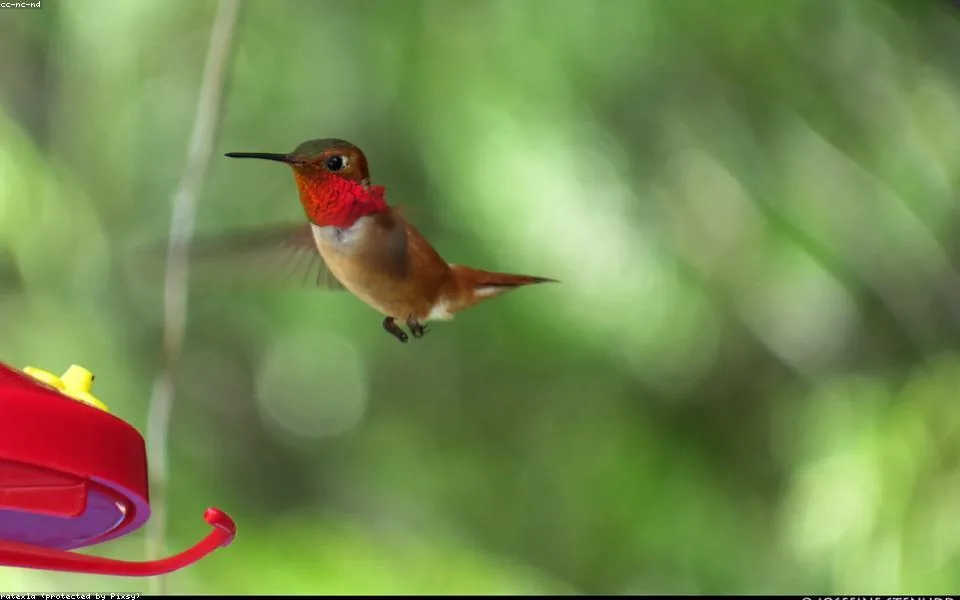
Your backyard can host 20 to 40 bird species throughout the year without any special equipment beyond a feeder and some patience. Canadian gardens sit within one of the richest migratory corridors in the Western Hemisphere, which means even a small urban plot in Quebec can attract warblers, sparrows, finches, and woodpeckers across four distinct seasons.
Why Canadian Backyards Are Underrated Birdwatching Spots
Most birders drive to provincial parks or wetland reserves, overlooking what shows up 10 meters from the kitchen window. A study published by Birds Canada found that yard-based observations submitted to citizen science platforms account for roughly 30% of all winter bird data collected annually in the country. That number reflects something real: residential gardens, especially those with native plantings and water sources, function as legitimate habitat fragments, not just feeding stations.
The key difference between a yard that attracts 8 species and one that attracts 35 is structural diversity, not the price of your feeder.
Core Setup: Feeders, Water, and Shelter
Before identifying species, get the habitat right. Three elements drive bird activity more than anything else.
Feeders
| Feeder Type | Best Seed/Food | Primary Species Attracted |
|---|---|---|
| Tube feeder (small ports) | Nyjer (thistle) | American Goldfinch, Pine Siskin, Common Redpoll |
| Platform/tray feeder | Mixed seed, sunflower | Dark-eyed Junco, White-throated Sparrow, Blue Jay |
| Suet cage | Rendered beef suet | Downy Woodpecker, Hairy Woodpecker, Black-capped Chickadee |
| Hopper feeder | Black-oil sunflower | Northern Cardinal, House Finch, Evening Grosbeak |
| Hummingbird feeder | 4:1 water-to-sugar solution | Ruby-throated Hummingbird (May to September) |
Feeder placement matters more than most guides admit. Place feeders either within 1 meter of a window or more than 10 meters away. The middle range, 2 to 9 meters, produces the highest rate of window collisions, which kill an estimated 25 million birds per year in Canada according to Environment and Climate Change Canada data.
Water Sources
A moving water source outperforms a static birdbath by a significant margin. Drippers and misters attract species that ignore seed entirely, particularly warblers during spring migration. In Quebec, a heated birdbath extends activity through December and January when natural water sources freeze.
Shelter and Perching Structure
- Leave dead snags standing if safe: they provide nest cavities and insect foraging for woodpeckers
- Dense shrubs like serviceberry (Amelanchier) and dogwood (Cornus) offer cover from hawks
- Brush piles in corners create ground-level habitat for Song Sparrows and towhees
- Nest boxes sized for specific species: 3.8 cm entry hole for Black-capped Chickadee, 5 cm for Eastern Bluebird
Bird Species by Season in Quebec Backyards
Winter (December to February)
Winter is when feeders earn their place. Species that remain through Quebec winters are year-round residents supplemented by northern irruptions, meaning some years bring unusual visitors depending on boreal seed crop failures.
| Species | Typical Arrival Pattern | Notes |
|---|---|---|
| Black-capped Chickadee | Year-round resident | Readily uses nest boxes; caches seeds in bark |
| Dark-eyed Junco | October through April | Ground feeder; prefers millet on platform |
| Common Redpoll | Irregular winter irruption | Appears in high numbers when birch crop fails north |
| Evening Grosbeak | Irregular; cyclical | Travels in flocks; empties sunflower feeders fast |
| American Tree Sparrow | October to March | Identified by single dark breast spot; eats millet |
| Hairy Woodpecker | Year-round | Larger than Downy; bill length equals head depth |
Irruption years for species like Snowy Owl, Pine Grosbeak, and Bohemian Waxwing are tied to food availability on the boreal breeding grounds. Checking Birds Canada's Winter Finch Forecast each October gives a reliable preview of what to expect at feeders.
Spring Migration (April to May)
Migration brings species that will not stay. The window for certain warblers in southern Quebec is often 10 to 14 days, so consistent yard observation during the first three weeks of May pays off.
Species to watch for during spring passage:
- Yellow-rumped Warbler (first warbler to arrive, mid-April)
- Palm Warbler (low foraging, tail-pumping behavior)
- Ruby-crowned Kinglet (tiny, hyperactive, arrives before leaves)
- White-throated Sparrow (distinctive whistle: "Old Sam Peabody")
- Rose-breasted Grosbeak (adult male unmistakable; arrives late May)
Breeding Season (June to August)
Activity at feeders drops as natural food peaks. This is the season to observe behavior: fledglings following parents, territorial singing, and the first forays of young birds. American Robin, Baltimore Oriole, Cedar Waxwing, and Common Yellowthroat are all detectable in suburban Quebec gardens with appropriate vegetation.
Orioles respond specifically to orange halves and grape jelly on platform feeders, typically from mid-May through July. Remove feeders by early August as birds shift to natural fruit.
Fall Migration (August to October)
Fall migration is longer and more diffuse than spring. Many birders find September and October more productive for yard diversity because birds are less vocal and tend to linger near food and cover.
Key fall species in Quebec backyards:
- Magnolia Warbler
- Tennessee Warbler
- Swainson's Thrush (detected more by chip calls at night than daytime visits)
- Lincoln's Sparrow (often overlooked among White-throated Sparrows)
- Ruby-throated Hummingbird (departs by mid-October; keep feeders up 2 weeks after last sighting)
Native Plants That Double Your Species Count
Seed feeders attract seed-eaters. Native plants attract everything else. Insects supported by native plants are the primary food source for most bird species during breeding season, and even dedicated seed-eaters switch to protein-rich insects when feeding nestlings.
| Plant | Type | Birds Supported |
|---|---|---|
| Serviceberry (Amelanchier canadensis) | Shrub/small tree | Cedar Waxwing, American Robin, thrushes |
| Wild Bergamot (Monarda fistulosa) | Perennial herb | Ruby-throated Hummingbird, orioles |
| Black-eyed Susan (Rudbeckia hirta) | Perennial | American Goldfinch (seeds in fall) |
| Gray Dogwood (Cornus racemosa) | Shrub | 30+ species consume fall berries |
| Eastern White Cedar (Thuja occidentalis) | Tree | Year-round cover, Yellow-rumped Warbler in winter |
| Common Elderberry (Sambucus canadensis) | Shrub | Waxwings, thrushes, orioles in August |
A yard with five of these plants and no feeders will typically outperform a yard with four feeders and lawn-dominant landscaping.
Recording and Contributing Observations
Backyard data has scientific value when submitted consistently. Two platforms accept Canadian yard observations and feed into continental research:
eBird (Cornell Lab of Ornithology) accepts observations from any location including private yards. A stationary count from your yard with an exact species list and time contributes to distribution maps used by conservation organizations.
Birds Canada's Project FeederWatch runs from November through April, requiring participants to count birds at feeders on two consecutive days per week. Data from the program feeds directly into population trend analysis for 130+ species. Participation costs approximately $18 CAD per season for non-members.
Keeping a yard list is also a practical motivation tool. Most active backyard birders in Quebec accumulate 50 to 70 species per year from a single location, with long-term lists exceeding 100.
Common Identification Mistakes in Canadian Backyards
Even experienced birders misidentify yard birds under casual conditions.
- Downy vs. Hairy Woodpecker: Size comparison is unreliable without reference. Use bill length relative to head depth. Hairy's bill equals the depth of its head; Downy's is noticeably shorter.
- House Sparrow vs. native sparrows: House Sparrows (introduced, non-native) are stockier with thicker bills. Chipping Sparrow has a clean rusty cap and white eyebrow; Song Sparrow shows heavy breast streaking with a central spot.
- Purple Finch vs. House Finch: Purple Finch male shows raspberry-wine color through the head and back. House Finch male has red confined to the head and chest, with streaked brownish flanks.
- Cooper's Hawk vs. Sharp-shinned Hawk: At feeders, both cause the same sudden silence and scatter. Cooper's is crow-sized with a rounded tail; Sharp-shinned is smaller with a squared tail tip. Separation is difficult and often not possible at a distance.
Frequently asked questions
What is the single most effective thing I can add to attract more bird species to my yard?
A moving water source, specifically a dripper or small pump in a birdbath, attracts a wider range of species than any feeder type. Many birds that do not eat seeds, including warblers, vireos, and thrushes, will visit water during migration. In tests conducted by backyard naturalists in Quebec, yards with moving water logged 40 to 60% more species during spring migration than comparable yards without it.
When should I stop putting out feeders in spring?
There is no hard rule, but reduce or remove suet by late April when temperatures regularly exceed 10 degrees Celsius, as fat goes rancid quickly in warmth. Seed feeders can run year-round without ecological harm to birds, contrary to older advice that suggested feeders discourage migration. Research shows birds use environmental cues, not food availability, to time departure.
How do I prevent window strikes without replacing my windows?
Apply external deterrents in a grid pattern no wider than 5 cm horizontally and 10 cm vertically. Window films like CollidEscape or Feather Friendly tape are effective and durable through Canadian winters. Internal decals placed on the room-facing side of glass are largely ineffective because birds perceive the window as a reflection of the exterior environment, not the interior.
Is it worth setting up a nest box if I only have a small urban yard?
Yes, if you have even one mature tree and low pesticide use nearby. Black-capped Chickadees will use boxes in yards as small as 200 square meters provided the box is mounted 1.5 to 3 meters high on a tree or post, faces east or northeast, and has no perch rod below the entrance. Clean the box each March before nesting season begins and remove old nesting material to reduce parasite loads.