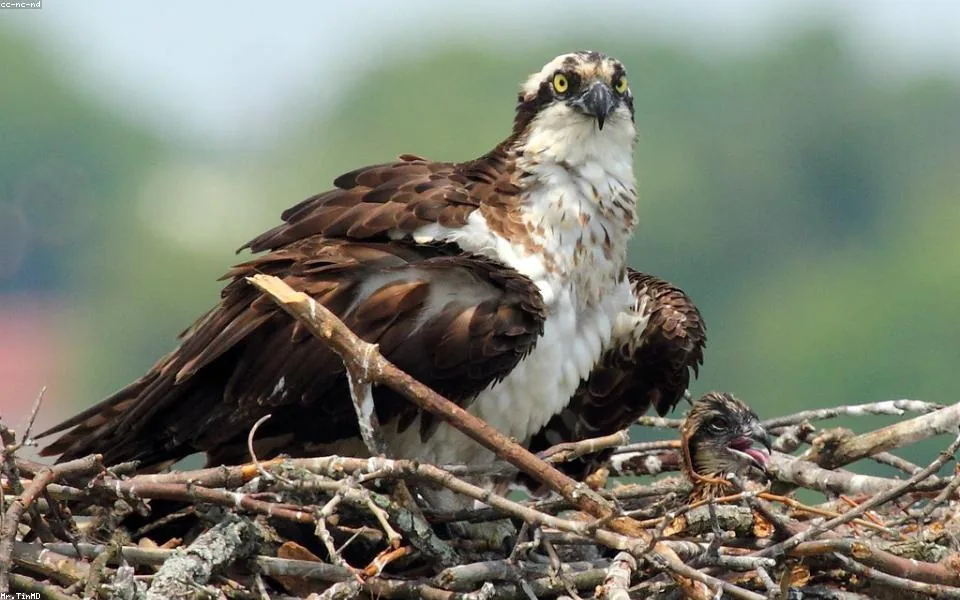
Quebec is one of the most rewarding provinces for birding in North America. With over 450 recorded species, boreal forests, coastal mudflats along the St. Lawrence, and migratory corridors that funnel millions of birds each spring and fall, the province offers genuine variety — not just checklist padding.
Why Quebec Stands Out for Birding
The province sits at the intersection of three major flyways: the Atlantic, Mississippi, and Central flyways all touch or run adjacent to Quebec territory. This creates unusual overlap during migration — you can spot shorebirds from the Arctic on the same morning as warblers moving up from the Gulf Coast.
Quebec's habitats divide into five distinct ecological zones:
- Arctic-alpine tundra (Nunavik) — breeding habitat for Snowy Owls, Lapland Longspurs, Snow Buntings
- Boreal forest (Laurentides, Abitibi) — Spruce Grouse, Black-backed Woodpecker, Gray Jay, crossbills
- Mixed forest transition (Outaouais, Eastern Townships) — thrushes, vireos, warblers, Barred Owl
- St. Lawrence lowlands — raptors, waterfowl, shorebirds during migration
- Maritime/estuarial zones (Gaspesie, Bas-Saint-Laurent) — seabirds, Atlantic Puffin, Northern Gannet
Top Birding Trails and Sites in Quebec
1. Cap Tourmente National Wildlife Area
Located 50 km east of Quebec City, Cap Tourmente is one of the most significant migratory stopovers in North America. Every October, up to 800,000 Greater Snow Geese stage here on the St. Lawrence tidal flats.
| Season | Key Species | Best Timing |
|---|---|---|
| Spring (Apr-May) | Greater Snow Goose, Northern Pintail, American Black Duck | Late April peak |
| Summer (Jun-Aug) | Least Bittern, Marsh Wren, Yellow Warbler | June-July |
| Fall (Sep-Oct) | Greater Snow Goose (mass staging), Peregrine Falcon | Mid-October peak |
| Winter (Nov-Feb) | Snowy Owl, Rough-legged Hawk, Common Redpoll | January |
The site has 18 km of marked trails. The marsh boardwalk trail (3 km loop) gives direct access to reedbeds without flushing birds. Bring rubber boots — the tidal zone gets muddy fast.
2. Parc National du Mont-Tremblant
The largest provincial park in Quebec at 1,510 km2 hosts boreal and mixed-forest species year-round. The Riviere-du-Diable corridor is particularly productive for breeding warblers — 28 warbler species have been confirmed nesting within park boundaries.
Top species targets:
- Connecticut Warbler (rare, localized in park's black spruce bogs)
- Olive-sided Flycatcher
- Common Loon (abundant on park lakes — roughly 1 pair per 3 km of shoreline)
- Moose-adjacent species: Gray Jay, Boreal Chickadee, Three-toed Woodpecker
The L'Envol trail (6.5 km) crosses multiple microhabitats and is consistently the most species-rich route in the park by eBird data.
3. Pointe-du-Buisson and Lac Saint-Pierre Biosphere Reserve
Lac Saint-Pierre, declared a UNESCO Biosphere Reserve in 2000, holds the largest freshwater archipelago in the St. Lawrence River. Spring flooding creates shallow-water habitat that attracts 288 recorded bird species, including 24 species of waterfowl during peak migration in late April.
Pointe-du-Buisson, at the western end of the reserve, is the most accessible birding entry point. The riverside trail system (7 km total) puts birders directly in front of migrating raptors in April — Broad-winged Hawk counts regularly exceed 500 in a single morning during mid-May kettling.
4. Parc National de la Gaspesie
For birders willing to travel further, Gaspesie offers Bicknell's Thrush, one of the rarest breeding songbirds in North America with total population estimated under 100,000 individuals. It breeds above 900m elevation in wind-deformed balsam fir.
Mount Albert (1,154 m) is the most reliable site. The approach trail is 15 km round trip with 800 m elevation gain — physically demanding but productive. The alpine plateau also holds American Pipit, Horned Lark, and Common Ravens in numbers.
Seabirds along the Gaspesie coast:
- Northern Gannet (colony at Bonaventure Island — 110,000+ pairs, one of largest in world)
- Black-legged Kittiwake
- Common and Thick-billed Murres
- Atlantic Puffin (Bonaventure, Ile Brion)
5. Oka and the Ottawa Valley Corridor
The western edge of Quebec, particularly the Lac des Deux-Montagnes area near Oka, serves as a productive year-round site. Christmas Bird Count data from the Montreal region consistently places this area in the top 5 for species diversity in Quebec in winter.
Notable species here include:
- Tufted Titmouse (at northern range limit)
- Red-bellied Woodpecker (expanding range northward)
- Bald Eagle (regular in winter along open water)
- American Woodcock (excellent showing in April at dusk, forest edges)
6. Tadoussac and the Saguenay-St. Lawrence Marine Park
Tadoussac is primarily known for whale watching, but it is also one of the best inland hawk-watch sites in eastern Canada during fall migration. The dunes and headland create a geographic funnel.
Fall hawk counts (Sept 1 - Nov 15 average annually):
- Sharp-shinned Hawk: 40,000-60,000
- Cooper's Hawk: 3,000-5,000
- Broad-winged Hawk: 10,000-18,000 (September peak)
- Osprey: 800-1,200
- Golden Eagle: 100-300
The Comite d'Ornithologie de Tadoussac (COT) runs a staffed banding and count station from mid-August through October. Daily counts are posted publicly and are a reliable planning tool.
Seasonal Birding Calendar for Quebec
| Period | What's Happening | Priority Sites |
|---|---|---|
| Late March - April | Waterfowl migration, first warblers, woodcock display | Cap Tourmente, Oka, Ottawa Valley |
| May | Peak warbler migration, shorebirds begin | Mont-Tremblant, Lac Saint-Pierre, Pointe-du-Buisson |
| June - July | Breeding season, boreal species on territory | Gaspesie, Mont-Tremblant, Abitibi |
| August - September | Shorebird migration, hawk watch begins | Tadoussac, St. Lawrence flats |
| October | Snow Goose staging, peak hawk watch | Cap Tourmente, Tadoussac |
| November - February | Winter finches, owls, waterfowl on open water | Oka, Montreal area, Eastern Townships |
Green Birding in Quebec
Green birding — reaching sites by human-powered transport — is increasingly practiced in Quebec. Several top birding trails are accessible by bicycle or public transit:
- Cap Tourmente: accessible from Quebec City via Route Verte bike path (combined with ferry)
- Parc du Mont-Royal (Montreal): top urban birding with 170+ species recorded; fully accessible by metro
- Riviere-des-Mille-Iles: kayak-accessible waterway with nesting herons, kingfishers, and Black Terns
The city of Montreal is itself an underrated migration trap. During peak warbler migration in May, Morgan Arboretum and Bois-de-Saraguay regularly turn up 25-30 warbler species in a single morning.
Practical Trail Information
What to bring:
- Binoculars: 8x42 is the standard recommendation for Quebec's mixed habitats — lower magnification loses detail in boreal forest; higher magnification suffers in moving foliage
- Rain gear year-round: coastal and boreal sites are consistently wet
- Rubber boots for tidal flats (Cap Tourmente, Lac Saint-Pierre)
- Insect repellent May-August — black fly season in boreal regions is intense from mid-May to late June
Permits and access:
- Cap Tourmente: Parks Canada fee ($8.50/adult as of 2026)
- Mont-Tremblant, Gaspesie: Sepaq pass required (annual $46 or daily rate)
- Lac Saint-Pierre: freely accessible public areas; some Biosphere Reserve zones require guided access
Apps and data tools:
- eBird remains the primary data source for trip planning — Quebec has over 4.2 million observations logged as of early 2026
- Merlin (Cornell Lab) works well for Quebec with its strong French-Canadian localization
Quebec Birding by Experience Level
| Level | Recommended Site | Target Species | Expected Species Count |
|---|---|---|---|
| Beginner | Parc du Mont-Royal, Montreal | Common warblers, raptors, waterfowl | 40-70 per season |
| Intermediate | Cap Tourmente, Lac Saint-Pierre | Shorebirds, waterfowl, raptors | 80-120 per season |
| Advanced | Gaspesie (Bicknell's Thrush), Tadoussac hawk watch | Rare breeders, seabirds, vagrant species | 150-200+ per season |
Frequently asked questions
When is the best time to go birding in Quebec?
May is the single most productive month. Warbler migration peaks between May 10-25, shorebirds are moving through St. Lawrence flats, and breeding species have arrived on territory. Vocalization is at maximum, which improves detection significantly in dense forest. October is the second priority for volume — Snow Goose staging at Cap Tourmente and hawk migration at Tadoussac overlap cleanly.
Do I need to speak French to bird in Quebec?
Trail signage in provincial parks (Sepaq) is bilingual. eBird hotspot notes are increasingly available in both languages. In rural areas like Gaspesie and Abitibi, basic French is genuinely useful when asking landowners for access or seeking local knowledge about recent sightings. Most ranger and park staff in major sites are English-functional.
What are the rarest birds regularly seen in Quebec?
Bicknell's Thrush on the Gaspesie highlands is the most sought-after breeding rarity. Harlequin Duck winters on the lower St. Lawrence around Ile d'Orleans. Yellow Rail breeds in marshes of Lac Saint-Pierre but is secretive — tape playback is the standard detection method in June. Kirtland's Warbler occasionally appears as a vagrant during migration along the St. Lawrence.
Is birding in Quebec productive in winter?
Yes — Quebec winter birding has a loyal following. Snowy Owl irruption years (roughly every 3-5 years, correlated with lemming cycles) bring birds into agricultural zones around Quebec City and Montreal in visible numbers. Winter finch species — Evening Grosbeak, Purple Finch, Pine Siskin, redpolls, crossbills — vary annually based on boreal seed crop. The Quebec Finch Forecast, published each fall by Ron Pittaway and updated by Ontario/Quebec ornithologists, has become the standard planning tool for winter birding across eastern Canada.