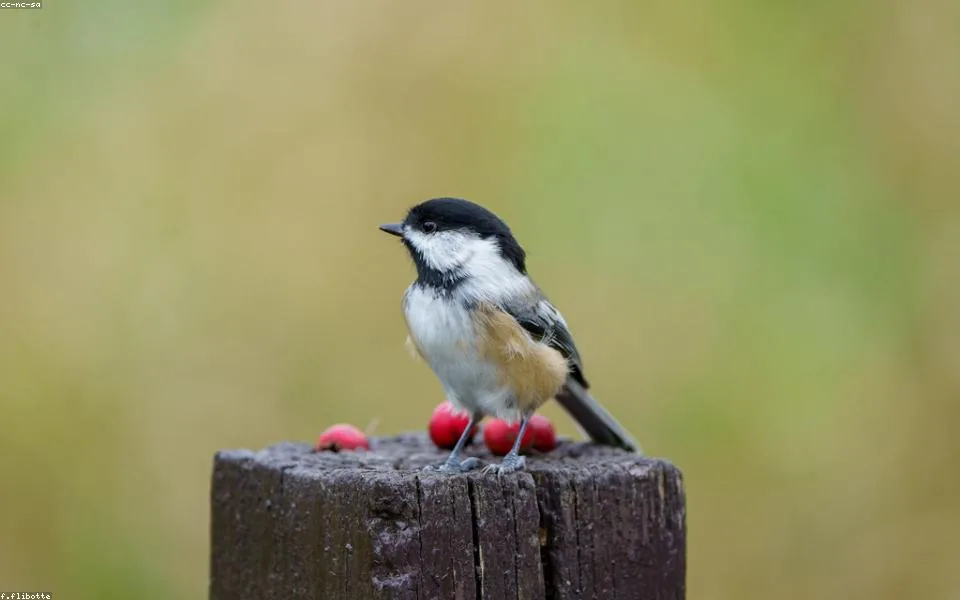
Learning bird sounds transforms every walk in the woods into a richer experience. In Canada alone, over 650 species have been recorded, and the majority are easier to detect by ear than by sight. This guide covers how bird vocalizations work, which calls matter most for field identification, and how to build your listening skills whether you're in a Quebec boreal forest or a suburban backyard.
Why Sound Matters More Than Sight in Birding
Most experienced birders estimate that 60–80% of species are identified by sound before they're ever seen. Dense foliage, low light, and fast-moving birds make visual confirmation difficult. A Hermit Thrush tucked inside a spruce stand will sing for minutes without showing itself, while a Black-capped Chickadee announces its species name phonetically every few seconds.
In practical terms, knowing calls lets you cover more ground and log more species per hour in the field.
The Difference Between Songs and Calls
Birds produce two main categories of vocalization. Confusing them leads to misidentification.
| Type | Purpose | Who produces it | When |
|---|---|---|---|
| Song | Territory defense, mate attraction | Mostly males | Breeding season (April–July) |
| Call | Contact, alarm, flock coordination | Both sexes, all ages | Year-round |
| Flight call | Navigation during migration | Both sexes | Nocturnal migration peaks |
| Begging call | Food solicitation | Juveniles | Post-fledging, summer |
Songs are typically longer, more complex, and species-specific. Calls are shorter — often a single note or brief phrase — and sometimes shared across related species, which makes them harder to learn but critically useful during migration.
How Birds Produce Sound
Birds have a syrinx instead of a larynx. The syrinx sits at the junction of the two bronchial tubes, which means some species can produce two independent sounds simultaneously. Veeries and Wood Thrushes use this to create their characteristic flute-like harmonics — a single bird sounding like a duet.
Muscles controlling the syrinx vary in complexity. Songbirds (order Passeriformes) have up to nine pairs of syringeal muscles. Vultures and some storks have almost none, which is why they can only hiss or grunt.
Key Sound Categories for Field Identification
Rather than memorizing every bird sound at once, start with these functional categories:
Alarm calls — Sharp, high-pitched, and often similar across species. A Blue Jay's scream alerts every bird in the area. American Robins produce a sharp "tuk" when a hawk passes overhead.
Contact calls — Soft, repeated notes used to maintain flock cohesion. Common Redpolls in a winter flock produce constant dry "chit" notes. Losing this sound means the flock has moved on.
Territorial songs — Complex and species-specific. The Rose-breasted Grosbeak sounds like a robin that took singing lessons. The Ovenbird's "teacher-teacher-teacher" escalates in volume and is unmistakable once learned.
Flight calls — Thin, high-pitched notes produced during migration, mostly at night. Identifying these requires practice and often a recording device. Swainson's Thrush produces a rising "whit" flight call; Veery produces a descending "veer."
12 Common Canadian Bird Sounds Worth Learning First
Start with species that are widespread, vocal, and acoustically distinctive.
| Species | Sound description | When heard | Region |
|---|---|---|---|
| Black-capped Chickadee | "Chick-a-dee-dee-dee" / whistled "fee-bee" | Year-round | All provinces |
| American Robin | Rich caroling phrases; sharp "tuk" alarm | March–August | All provinces |
| White-throated Sparrow | "Old Sam Peabody, Peabody, Peabody" | April–September | Boreal edge zones |
| Hermit Thrush | Flute-like spiraling phrases, haunting quality | May–August | Forests, Quebec and Ontario |
| Common Loon | Tremolo, wail, yodel, hoot | May–September | Lakes across Canada |
| Pileated Woodpecker | Loud, jungle-like laughing call | Year-round | Mature forests |
| Cedar Waxwing | High-pitched thin trill, almost insect-like | May–October | Forest edges, gardens |
| Dark-eyed Junco | Dry trill; sharp "tick" contact note | Year-round (winter dominant) | All provinces |
| Yellow Warbler | "Sweet sweet sweet, I'm so sweet" | May–July | Shrubby wetlands |
| Great Horned Owl | Deep "hoo-h'HOO-hoo-hoo" | October–March (breeding) | All provinces |
| Boreal Chickadee | Hoarser, slower than Black-capped | Year-round | Boreal forests |
| Sandhill Crane | Loud, rattling bugle, carries over 1 km | March–November | Prairies, migration corridors |
How to Train Your Ear: Practical Methods
Passive listening is the slowest way to learn. These structured approaches accelerate the process:
- Focus on one species per outing. Pick a target — say, Yellow Warbler — and listen specifically for it. Ignore everything else. After 10 outings, you'll know that song permanently.
- Use spectrogram apps. Merlin Bird ID (Cornell Lab) shows a live spectrogram while recording. Seeing sound as a visual pattern reinforces memory differently than audio alone.
- Learn the alarm call first. A species' alarm call appears more often than its song across the year. If you know a Song Sparrow's "chip" note, you'll detect it in every season, not just breeding months.
- Record at dawn. The dawn chorus (30 minutes before to 60 minutes after sunrise) compresses maximum vocal activity into a short window. Boreal mornings in Quebec in mid-May can produce 20+ singing species in under an hour.
- Phonetic anchors work, but selectively. "Old Sam Peabody" is reliable for White-throated Sparrow. But phonetic mnemonics fail for complex songs like Swainson's Warbler — spectrogram learning is more effective there.
Recording Bird Sounds in the Field
A basic recording setup makes your observations verifiable and improves your own learning feedback loop.
| Equipment tier | What you need | Estimated cost (CAD) |
|---|---|---|
| Entry level | Smartphone + Merlin app | $0–30 |
| Intermediate | Zoom H1n recorder + basic parabolic reflector | $150–300 |
| Serious field use | Sennheiser ME66 + Marantz PMD661 | $700–1,200 |
| Professional | Telinga parabolic + Sennheiser MKH50 | $2,500+ |
For most birders, a Zoom H1n or similar handheld recorder plus the free Merlin Sound ID is sufficient to log, review, and share recordings. Uploading recordings to Xeno-canto or through eBird contributes directly to citizen science databases used by researchers across Canada.
Seasonal Patterns in Canadian Bird Vocalizations
Bird sound activity follows a predictable calendar. Knowing this prevents frustration when an expected species goes silent.
February–March: Great Horned Owls are already incubating eggs. Boreal Chickadees begin singing on mild days. American Crows re-establish territories.
April–May: Peak arrival of Neotropical migrants. By the third week of May in southern Quebec, over 100 species may be vocalizing simultaneously. This is the best window for learning warbler songs.
June–July: Song intensity drops sharply after mid-June as territories stabilize. Juveniles appear with begging calls. Some species begin pre-migratory silence.
August–September: Flight calls dominate as nocturnally migrating thrushes, warblers, and sparrows pass overhead. Running a recording device overnight near an open window can capture dozens of species.
October–November: Owl calling begins again. White-throated and Fox Sparrows move through in waves. Winter finch irruptions (Evening Grosbeak, Pine Siskin) arrive with contact calls.
December–January: Reduced diversity but consistent species. Black-capped Chickadee and Common Raven remain highly vocal even at -20C.
Sound Identification in Quebec: Regional Notes
Quebec's sound environment is distinct from the rest of Canada because of its boreal forest coverage and position on the Atlantic flyway. Birders in the Laurentians or Saguenay region regularly encounter species rare further west.
Species particularly notable for sound in Quebec:
- Bicknell's Thrush — Breeds above 900m on Quebec mountain summits. Song similar to Gray-cheeked Thrush but more nasal. Detect it on calm evenings in June.
- Philadelphia Vireo — Song nearly identical to Red-eyed Vireo but slightly higher-pitched and more hesitant. A species easily missed without deliberate listening.
- Lincoln's Sparrow — Subtle, bubbling song easily drowned out by wind. Prefers wet sedge meadows in northern Quebec.
- Connecticut Warbler — Loud "beecher-beecher-beecher" song in boreal bogs. Heard far more often than seen.
Green Birding and Sound-Based Surveys
Green birding — reaching birding locations without motorized transport — pairs naturally with sound-based survey methods. Walking or cycling to a site means arriving quieter, which directly increases detection rates. Studies from Birds Canada data suggest that observers arriving on foot detect 15–20% more species than those arriving by vehicle in the same habitat patch, partly due to reduced flush distance and partly because they begin listening earlier in their approach.
Point count surveys, used by Birds Canada's Breeding Bird Survey, rely almost entirely on audio detection within a fixed radius. Learning to identify by sound is therefore not just a personal skill — it directly improves the quality of data contributed to national monitoring programs.
Frequently asked questions
What is the difference between a bird call and a bird song?
A song is typically longer, melodically complex, and produced mainly by males during breeding season to attract mates or defend territory. A call is shorter — often a single note — and used by both sexes year-round for contact, alarm, or navigation. The same bird produces both, but they serve different functions and often sound completely different from each other.
Which apps are best for identifying bird sounds in Canada?
Merlin Bird ID from the Cornell Lab of Ornithology is the most accurate free option for Canadian species. It includes Sound ID, which identifies birds from live audio in real time, and covers all Canadian provinces with regional species packs. BirdNET (developed by Cornell and Chemnitz University) is a strong alternative for detailed spectrogram analysis. Both work offline once species packs are downloaded.
When is the best time of day to listen for bird sounds?
The dawn chorus, beginning about 30 minutes before sunrise and lasting 60–90 minutes after, is the most productive window. Song rates drop sharply by mid-morning in summer. A secondary peak occurs around dusk for some species, particularly thrushes and owls. Nocturnal recordings capture flight calls during active migration nights, typically September and October.
How do I contribute my bird sound recordings to Canadian science?
Upload recordings to eBird with the corresponding checklist — sound files attach directly to observation records. Xeno-canto accepts recordings of any quality and builds an open-access global archive. Birds Canada coordinates structured surveys like the Breeding Bird Survey and the Nocturnal Owl Survey, both of which accept volunteer participants across all provinces.